Islamic Vaccine Manufacturers Meeting Held in Pakistan
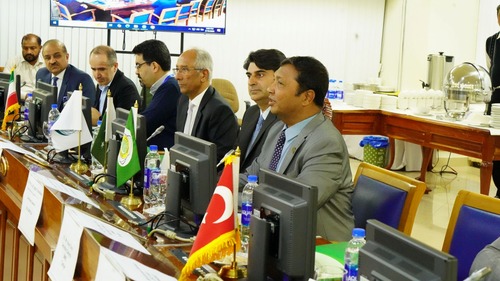
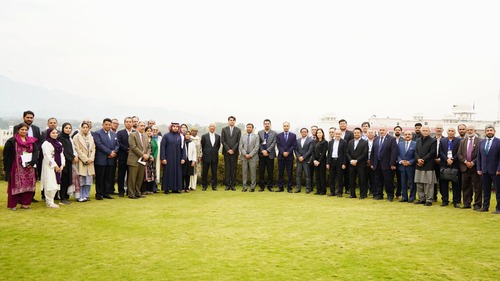
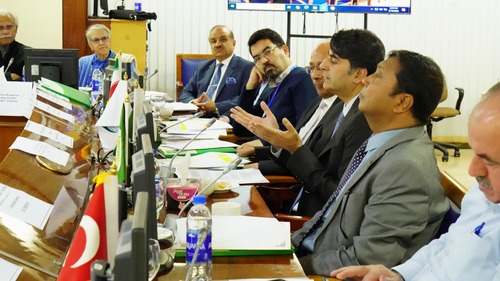
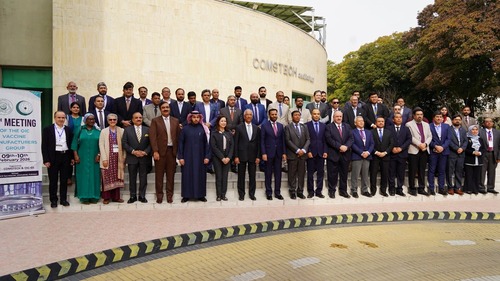
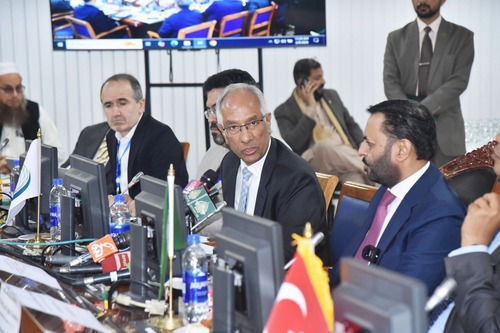
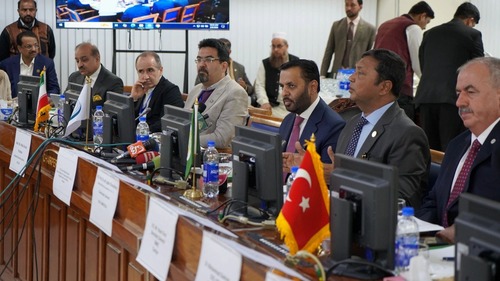
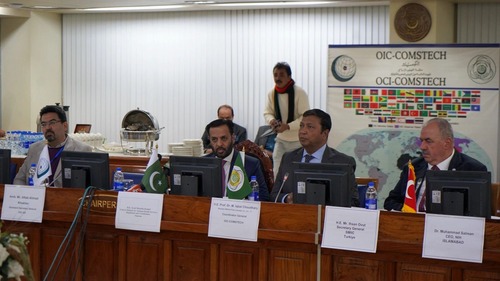
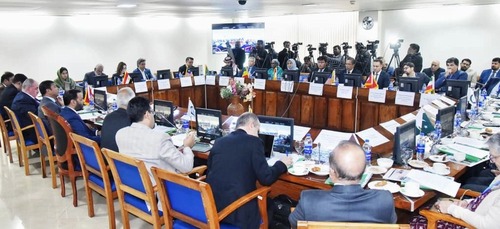
The fourth meeting of Islamic countries’ vaccine manufacturers was held on February 9–10 in Islamabad, Pakistan, hosted by the Secretariat of the COMSTECH (OIC Ministerial Standing Committee on Scientific and Technological Cooperation). The two-day gathering brought together leading vaccine producers—including the Pasteur Institute of Iran, Iran's Razi Vaccine and Serum Research Institute, Indonesia’s PT Bio Farma, Senegal’s Pasteur Institute, Malaysia’s Pharmaniaga Research Centre, and manufacturers from Pakistan and Saudi Arabia—alongside senior representatives from the World Health Organization, the Islamic Development Bank, SMIIC (Standards and Metrology Institute for Islamic Countries), Gavi, national regulatory authorities, vaccine producers, development partners, and experts from across the Muslim world. At the opening session, Federal Health Minister Dr. Syed Mustafa Kamal, OIC Assistant Secretary-General for Science and Technology Dr. Aftab Ahmad Khokher, and COMSTECH Coordinator General Dr. Muhammad Iqbal Choudhary emphasized the need for greater convergence among Islamic countries in vaccine research, development, and production—described as a vital step toward vaccine self-sufficiency and strengthened health security. Dr. Choudhary stated that the meeting was taking place at a critical global juncture, where self-reliance in vaccine production has become a strategic necessity rather than an option. He noted that the COVID-19 pandemic exposed vulnerabilities in global supply chains, especially in countries with high disease burdens and growing populations. He highlighted progress made by the Islamic Countries’ Vaccine Manufacturers Group since its establishment in 2014, including cooperation agreements and joint training programs with Indonesia’s Bio Farma and the Pasteur Institute of Iran.
In his address, Health Minister Dr. Syed Mustafa Kamal praised COMSTECH’s role in promoting scientific collaboration and public health initiatives. He said Pakistan currently relies on 13 imported vaccines but aims to develop indigenous vaccine production capacity by 2030 in partnership with OIC member states. He also proposed the formation of a vaccine alliance among Islamic countries to collectively address the health needs of nearly 1.9 billion people. OIC Assistant Secretary-General Dr. Aftab Ahmad Khokher reaffirmed the organization’s strong support for the Islamic Countries’ Vaccine Manufacturers Group, stressing that boosting vaccine production in member states is central to the OIC science and development agenda. He emphasized regulatory convergence, standardization, and greater intra-OIC cooperation, while commending COMSTECH for translating political commitment into tangible outcomes. During the opening session, Iran, Indonesia, and Senegal were recognized as three leading vaccine-producing countries among the 57 OIC member states.
On the first day, Dr. Ehsan Mostafavi, the Director General of the Pasteur Institute of Iran, outlined the activities and achievements of the Institute and announced his institute’s readiness to collaborate with OIC member countries in vaccine and biological product manufacturing and technology transfer. Key discussions at the meeting focused on the governance of the Islamic vaccine manufacturers’ group, financing mechanisms, vaccine equity and access, pandemic preparedness, regional stockpiling, emergency deployment protocols, and short-, medium-, and long-term operational plans aimed at achieving vaccine self-sufficiency in Islamic countries.
The closing ceremony was attended by Pakistan’s Minister of State for Health Services, Regulations and Coordination, Dr. Mukhtar Ahmed Bharath. The meeting concluded with consensus on developing a practical roadmap to enhance vaccine accessibility, affordability, quality, and regional cooperation—contributing to the health sector in Islamic countries and beyond. It is worth noting that COMSTECH and Iran’s Pasteur Institute have a five-year cooperation memorandum, under which both parties have agreed to collaborate on developing and implementing joint training programs and advancing health systems in Islamic countries. To date, two training courses have been conducted by Iranian Pasteur Institute specialists in Pakistan, and planning is underway to host short-term courses at the institute for trainees from Islamic countries.