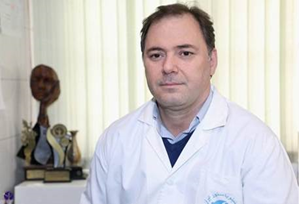
Prof. Morteza Karimipoor, Director of Research, and Technology of the Pasteur Institute of Iran Elaborates on Over a Century of Leadership in Health Promotion, Research, and Innovation by This Institute
Founded in 1920, the Pasteur Institute of Iran is one of the country’s oldest and most prestigious scientific and health institutions. As a proud member of the globally recognized Pasteur Network, its mission has always centered on promoting public health, preventing and controlling infectious diseases, advancing strategic health research, producing vaccines and biological products, and training specialized human resources. Throughout its century‑long history, the Institute has led the fight against major diseases—including smallpox, cholera, plague, typhoid, relapsing fevers, rabies, tuberculosis, hepatitis, viral hemorrhagic fevers, and COVID‑19—while pioneering the monitoring of emerging and re‑emerging threats. By producing vaccines and diagnostic kits, operating specialized laboratories, and conducting needs‑driven research, the Institute has repeatedly stood at the forefront of public health crises, saving millions of Iranian lives. Tragically, this legacy of service has come at a cost: several of its experts have lost their lives during field missions or laboratory research dedicated to eradicating infectious diseases.
The Institute’s Specialized Health Services Management oversees its national and collaborating reference laboratories, which serve as the country’s diagnostic backbone for the health system and the Center for Communicable Disease Control. Within this complex operate two WHO collaborating centers (the Rabies Reference Laboratory and the Vector‑Borne Diseases Laboratory), thirteen national reference laboratories (covering pertussis, diphtheria, plague, tularemia, Q fever, Crimean‑Congo hemorrhagic fever, rabies, COVID‑19, malaria, Escherichia coli, prenatal diagnosis, and biochemistry), and three collaborating reference laboratories for influenza, hepatitis, and AIDS. In addition, the tuberculosis and pulmonary research laboratory as well as the mycology laboratory are active as health service providers to patients. Beyond these, the Institute’s laboratory complex also diagnoses diseases that are not routinely identifiable in academic systems, such as leptospirosis, leishmaniasis, borreliosis, bartonellosis, and rickettsioses. Several critical tests are performed only at the Pasteur Institute of Iran (or at very few centers nationwide), including culture and isolation of pertussis, plague, tularemia, and rabies viruses; diagnosis of arboviral (insect‑borne) diseases requiring specialized equipment; influenza virus culture; and antibiogram testing for tuberculosis and fungal diseases. The Institute also houses one of the country’s most advanced sequencing laboratories, equipped with next‑generation sequencing (NGS) technology.
National reference laboratories provide testing free of charge. Samples for arboviruses, viral hemorrhagic fevers, plague, tularemia, Q fever, pertussis, malaria, and biochemistry are received from medical university health networks. For pertussis and diphtheria, the Institute additionally supplies transport culture media to health centers to ensure standardized sampling and shipment. Furthermore, the Amol branch (Mazandaran Province) offers specialized rabies and leptospirosis diagnostics, while the Akenloo branch (Hamedan Province) focuses on emerging and re‑emerging diseases such as plague, tularemia, and Q fever. The Institute’s production research complex in Karaj’s Garmdareh area (Alborz Province) plays a vital role in disease prevention and diagnosis. It produces recombinant hepatitis B vaccine, BCG vaccine, coronavirus vaccine (PastoCovac), animal rabies vaccine, intravesical BCG solution (PastoCys), low‑volume injectables, laboratory animals, cell and microbial culture media, Widal and Wright antigens,Vibrio choleraediagnostic kits, purified water, and various liquid and lyophilized vaccines under aseptic conditions. The BCG vaccine scar on the arm of countless Iranians stands as an enduring symbol of the Institute’s deep, generational bond with the nation’s health. When the COVID‑19 epidemic struck Iran, the Institute rose to the challenge once again, leading the National Coronavirus Diagnosis Committee and positioning itself at the forefront of diagnosis and control. The jointly produced vaccine with Cuba’s Finlay Institute saved millions of lives across the country. To this day, the reference and collaborating reference laboratories of the Pasteur Institute of Iran, along with the Institute's Infectious Disease Rapid Response Team, have continued to evolve in line with the country's diagnostic needs. Whenever a national need has arisen—and whenever the Reference Health Laboratory or the Center for Communicable Disease Control of the Ministry of Health has requested a specific specialized service—the Institute has never hesitated to fulfill that important task.
All laboratory activities of the Pasteur Institute of Iran in the field of infectious diseases are carried out in accordance with international biosafety standards and ISO 15189 medical laboratory standards, with the goal of providing diagnostic services to the Ministry of Health. In this context, the Institute's biosafety regulations strictly prohibit the culture or production of dangerous biological agents with dual-use applications. For instance, any work related to plague, anthrax, drug-resistant tuberculosis, botulism, or viral, bacterial, and fungal infections is confined to the laboratory diagnosis of patient samples sent by the Ministry of Health and the country's medical universities. Another key service provided by these reference and health laboratories is the design and distribution of diagnostic kits. In recent years, the Pasteur Institute of Iran has successfully distributed diagnostic kits for diseases such as cholera, COVID-19, influenza, mpox, and leptospirosis to the laboratory network of the country's medical universities.
At the international level, the Pasteur Institute of Iran is an active member of the global Pasteur Network, which comprises 33 institutes across 25 countries on five continents. The Institute has also maintained close cooperation with the World Health Organization. In the past, for example, the eradication of smallpox in Iran and the wider region was achieved through this close collaboration, aided by vaccines produced at the Pasteur Institute of Iran. Today, the Institute hosts two WHO collaborating centers—one for rabies and another for vector-borne diseases. Throughout its history, the Institute has exported vaccines and other products to various countries and has organized numerous joint international educational and research programs. From the standpoint of international law, Iran acceded in 1972 (1351 AH) to the Convention on the Prohibition of the Development, Production and Stockpiling of Bacteriological (Biological) and Toxin Weapons, and has consistently emphasized its commitment to the Convention's provisions. As a scientific and health institution, the Pasteur Institute of Iran has conducted all its activities within the framework of these national and international commitments. The presence and cooperation of the Institute's specialists in WHO programs and other international bodies, along with regular visits by experts from international institutions, are clear evidence of the Institute's transparency, scientific credibility, and adherence to global standards.
Regarding the damage caused by recent incidents, while the Institute's main building—spanning 23,000 square meters—has been rendered inoperable, the Institute has still managed to maintain its core diagnostic services. It should be noted, however, that the recent damage—including the destruction of buildings, structures, laboratories, and equipment—has significantly impacted the Institute's capacity to diagnose diseases and respond to health crises, the most critical of which have been outlined above.
The Pasteur Institute of Iran considers the reports that have emerged following the recent damage to be an attempt to undermine the credibility of a national scientific and health institution. These reports are based on distortion of reality, unfounded connections, unscientific interpretations, and a disregard for the Institute’s true mission. Such actions could ultimately erode public trust in the country’s health infrastructure. Nevertheless, the Pasteur Institute of Iran remains committed to its scientific, specialized, and humanitarian mission in service to the health of the Iranian people.